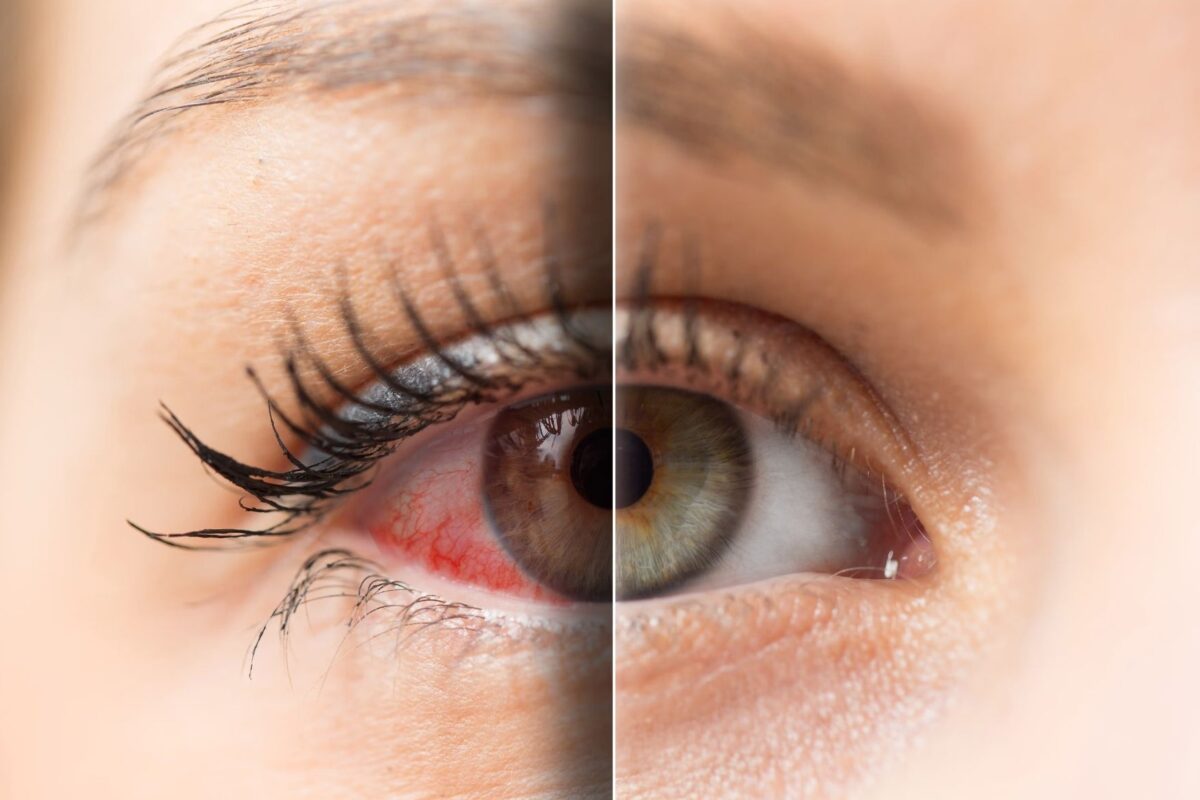
Eye-related symptoms of fatty liver

Eye-related symptoms of fatty liver

A silent health concern is gripping the Gulf region. Nearly 45% of the adult population has fatty liver.

When early symptoms do appear, they can be unclear and hard to pinpoint. Some people experience:

  • Fatigue
  • Muscle weakness or cramps
  • Lack of appetite
  • Itchy skin
  • Stomach pain
  • Diarrhea, nausea or vomiting
  • Feeling sick or like something is “off”

These symptoms can vary depending on the underlying cause of liver damage. These symptoms are often missed as stress or overwork,  but if fatigue becomes a daily issue, it needs paying closer attention. 

If it gets worse, advanced liver disease and eventual liver failure can affect your eyes and eyesight. These effects can include:

  • Yellow Eyes
  • Dry eyes
  • Eyesight problems caused by vitamin A deficiency
  • Small skin growths around your eyes
  • Cornea and crystalline lens issues
  • Problems with the nerves around your eyes
  • Vision loss (if underlying causes remain untreated)
  • Eye-related side effects from medication

Here’s how and why each of these happens:

Yellow eyes

Eye-related symptoms of fatty liver

Jaundice is a common eye-related sign of liver failure and other liver problems.

Jaundice makes your skin and the white part of each eye look yellow. Skin yellowing can be harder to notice in people who have darker skin tones.

A yellow-orange pigment called bilirubin is released when your liver removes old blood cells. A healthy liver removes most of the pigment, but a damaged liver has more difficulty.

When enough bilirubin builds up in your body, it can turn your skin and eyes yellow.

Jaundice isn’t always a direct sign of liver disease. It can also happen with:

  • Certain medications

Dry eyes / Xerophthalmia 

Liver problems can cause dry eyes. 

A gritty feeling

  • Burning
  • Itching
  • Blurry vision
  • Light sensitivity
  • Eyelid irritation

If fatigue, despite proper rest and good food, is worriying you, seek professional help and see your family doctor and eye speicalist before complications appear.

Caffeine ( tea, coffee, soft drinks) & Benefits for the Eyes

Caffeine ( tea, coffee, soft drinks) & Benefits for the Eyes

Caffeine affects the eyes topically by acting as an antioxidant and vasoconstrictor to temporarily reduce puffiness and dark circles by restricting blood flow.
It is also present in serums and creams formulated with ingredients like vitamin C and hyaluronic acid to address concerns such as wrinkles, fine lines, and hydration. While topical application helps with puffiness and dark circles.

Caffeine, scientifically known as 1,3,7- trimethylxathine is present in coffee beans. It is found in various beverages like tea, coffee, and soft drinks. Intake of 3 to 4 servings has favourable health benefits, toxic symptoms like increased heartbeats, tremours are possible with much higher doses.

Caffeine can influence tear production ( helps in dry eye syndrome), and its anti-oxidative property can delay the formation of cataract. In myopic Danish children, oral consumption of caffeine was shown to slow the progress of myopia and axial elongation.

However, it can affect intraocular pressure, but there is no indication that glaucoma patients should avoid caffeine intake.

The study involved using electronic databases, including Google Scholar and PubMed, by searching the following keywords: caffeine, eyes, dry eye syndrome, cataract, glaucoma, myopia, lids puffiness.

Regenerative Medicine and Ocular Surface Diseases

Regenerative Medicine and Ocular Surface Diseases ( DRY EYE DISEASE ) – Breakthrough therapies

Regenerative medicine focuses on repairing damaged tissue and regenerating missing or lost tissue while restoring normal form and function. Regenerative medicine works by stimulating your body’s own natural ability to repair and regenerate itself.

Exosome Therapy

Exosome therapy for the treatment of dry eye disease.

 Meibomian gland dysfunction, blepharitis, ocular rosacea and allergic conjunctivitis (collectively known as ocular surface disease, OSD) is an exciting and innovative approach which works by reducing inflammation, repairing damaged tissue and regenerating lost tissue. While exosome therapy is still undergoing research and clinical trials, it has shown great potential and promise as an effective treatment for patients who suffer from ocular surface diseases, especially when first line, conventional treatments haven’t provided sufficient relief.

In clinical practice the work  with exosomes  is derived from umbilical cord stem cells formulated as an extract which is instilled as eye drops. These drops are filled with growth hormones, anti-inflammatory cytokines, amino acids, proteins, lipids, and exosomes which stimulate the body’s own natural ability to heal, repair, regrow and regenerate cells and tissue. This extract is biologically active with the ability to differentiate into any cell or tissue type it contacts because it’s derived from pluripotent embryonic stem cells.

In dry eye disease, Meibomian gland dysfunction, blepharitis, ocular rosacea and allergic conjunctivitis (OSD), the corneal and conjunctival epithelial cells, and the lacrimal and Meibomian glands, are damaged due to chronic dryness and inflammation. Exosome therapy reduces inflammation supporting the healing, repair and regeneration of the ocular surface, and the lacrimal and Meibomian glands, thus improving the overall health and comfort of the eyes and eyelids.

Two key factors involved in dry eye disease, Meibomian gland dysfunction, blepharitis, and ocular rosacea are insufficient tear production by the lacrimal glands and insufficient oil production by the Meibomian glands. Exosome therapy can help stimulate the repair and regeneration of the lacrimal and Meibomian glands in both form and function. This results in the production of better quality and quantity of tears by the lacrimal glands and oil by the Meibomian glands, thus stabilizing the tear film, increasing comfort, and enhancing vision by supporting a smoother, healthier ocular surface.

Autologous Serum

Autologous Serum drops are used in the treatment of dry eye disease, Meibomian gland dysfunction, blepharitis, ocular rosacea and allergic conjunctivitis (OSD). They lubricate and promote healing and repair of the surface of the eyes, the lacrimal and Meibomian glands, and the eyelids. Autologous serum is custom made eye drops which take advantage of your own body’s natural growth factors, immunoglobulins, anti-inflammatory cytokines, antibodies, vitamins and other essential components in your blood. Dr. Muller arranges for you to have your blood drawn (as if you were donating blood), your blood is spun down using a centrifuge, and the serum is made into eye drops. Autologous serum drops have been shown to increase the health and comfort of the eyes and eyelids, decrease inflammation and scarring, promote healing and repair, enhance vision by supporting a smoother, healthier ocular surface, and make patients much more comfortable by reducing symptoms such as dryness, irritation, and redness.

Amniotic Membranes

Amniotic membranes are another innovative treatment used to enhance and facilitate healing and reduce inflammation for the treatment of dry eye disease, Meibomian gland dysfunction, blepharitis, ocular rosacea, allergic conjunctivitis, and other ocular conditions.

Amniotic membranes are therapeutic biologic corneal bandages (similar to contact lenses). These corneal bandage lenses are composed of amniotic membrane derived from the innermost layer of placental tissue which contains growth factors, anti-inflammatory cytokines, and extracellular matrix proteins that promote healing and repair of damaged tissue, and reduce inflammation. The natural therapeutic properties of these membranes also help decrease the risk of complications such as corneal ulcers or infections, mitigate scarring, enhance comfort, and improve vision by creating a smoother, healthier ocular surface.

A consultation with Eye Specialist is necessary to determine if these new modalities and latest treatment approaches are viable cure options for your specific eye problem related to Ocular Surface Disease.


World Retina Health Day

World Retina Health Day (September -2025)

This day highlights the importance of retinal health and the challenges faced by people living with retinal diseases. It is observed annually on the last Sunday of September to inform people about retinal health and raise awareness of degenerative retinal diseases. This day aims to unite scientists and doctors in the search for a cure for Retinitis Pigmentosa ( RP ) and all diseases that in one way or another cause damage to the retina.

World Retina Health Day

Latest developments in retinitis pigmentosa (RP) research focus on gene therapies, stem cell therapies, and optogenetic therapies, with some treatments showing promise in clinical trials for restoring vision or slowing disease progression. While gene therapy has shown success for specific gene mutations, other new approaches like optogenetics aim to make surviving retinal cells light-sensitive, and stem cell therapies attempt to replace damaged cells. N-acetylcysteine (NAC) is also being studied for its potential to improve vision and light sensitivity, and retinal implants offer a way to restore function for advanced cases

Gene Therapies

  • Corrective Gene Therapy: 

Involves introducing a healthy copy of a gene to replace a faulty one, with one form already approved for a specific RP variant (RPE65). 

  • Optogenetic Therapy: 

Uses viral vectors to deliver genes that make retinal cells, including those that are not normally light-sensitive, capable of responding to light to restore vision. 

Stem Cell Therapy 

  • Cell Regeneration: 

A promising experimental approach involves injecting stem cells to potentially regenerate damaged or dying retinal cells.

  • Paracrine Effect: 

Some stem cells used in trials have a paracrine effect, releasing growth factors that can help rescue or save malfunctioning cells in the retina.

Retinal Implants and Prosthetics

  • “Bionic Eyes”: 

Devices like the Argus II can provide some vision for individuals with advanced RP by bypassing damaged photoreceptors and directly stimulating retinal neurons. 

  • Photoswitch Molecule: 

Research is exploring KIO-301, a molecule that can give light sensitivity to retinal ganglion cells, which are often preserved in advanced RP. 

Other Promising Research

  • N-acetylcysteine (NAC): 

An oral supplement being tested in a large clinical trial for its potential to improve visual acuity and light sensitivity. 

  • Gene-Editing Techniques: 

Technologies like CRISPR are being used to correct disease-causing gene mutations. 

Important Considerations

  • No Universal Cure: 

Currently, no single treatment is effective for all forms of RP, and many treatments are still under development or experimental. 

  • Genetic Counseling: 

Recommended for families affected by RP to understand inheritance patterns, risks, and potential genetic testing. 

  • Supportive Care: 

Low vision services, optical aids, and counseling are crucial for managing vision loss and improving quality of life. 

Whatsapp Now